Last Updated on July 2, 2026 by Lindsey
This is a living post. We’re in the middle of our own relocation right now, so I’ll keep updating it as we go.
So you’re thinking about moving to Marbella with kids. Maybe you’ve already gone down the rabbit hole of Costa del Sol Facebook groups and Idealista listings at midnight. Maybe someone at your kid’s school just did it and now you can’t stop thinking about it. Either way, here you are.
I get it. We’ve been planning our European family relocation for years, and I can tell you: the research phase is intense. There’s a lot of information out there, but very little of it is from families who are actually in the middle of moving to Marbella with kids — dealing with school applications, visa paperwork, property searches, and currency transfers all at the same time.
This is that post. Right now, as I write this, we’re packing up our house in Northern Virginia and shipping out to Marbella in July.
We’re a family of four. Our daughters are 11 and 13. We’re doing the Spanish Digital Nomad Visa. We bought a freestanding villa in the hills near Old Town. And we’ve made approximately one thousand mistakes and discoveries along the way that I’m happy to tell you about.
This hub post covers everything we’ve learned. As I create additional deep dive content, I will add links here as well.
- Is Moving to Marbella with Kids Actually a Good Idea?
- The Big Decisions: What You’re Actually Choosing
- 1. Which Marbella Neighborhood is Right for Me?
- Nearby but Not Marbella
- East Marbella (Quieter & Residential)
- 2. Which Marbella School is Right for Us? (The Biggest Question for Families Moving to Marbella with Kids)
- 3. Visa: The Digital Nomad Visa (DNV)
- 4. Property: Buy vs. Rent, and Why We Bought
- 5. Moving the Money
- Cost of Living: The Honest Version
- Things to Know Before You Go
- Resources Worth Bookmarking
- Frequently Asked Questions About Moving to Marbella with Kids
- The Bottom Line
- Plan a Visit to Spain
Is Moving to Marbella with Kids Actually a Good Idea?
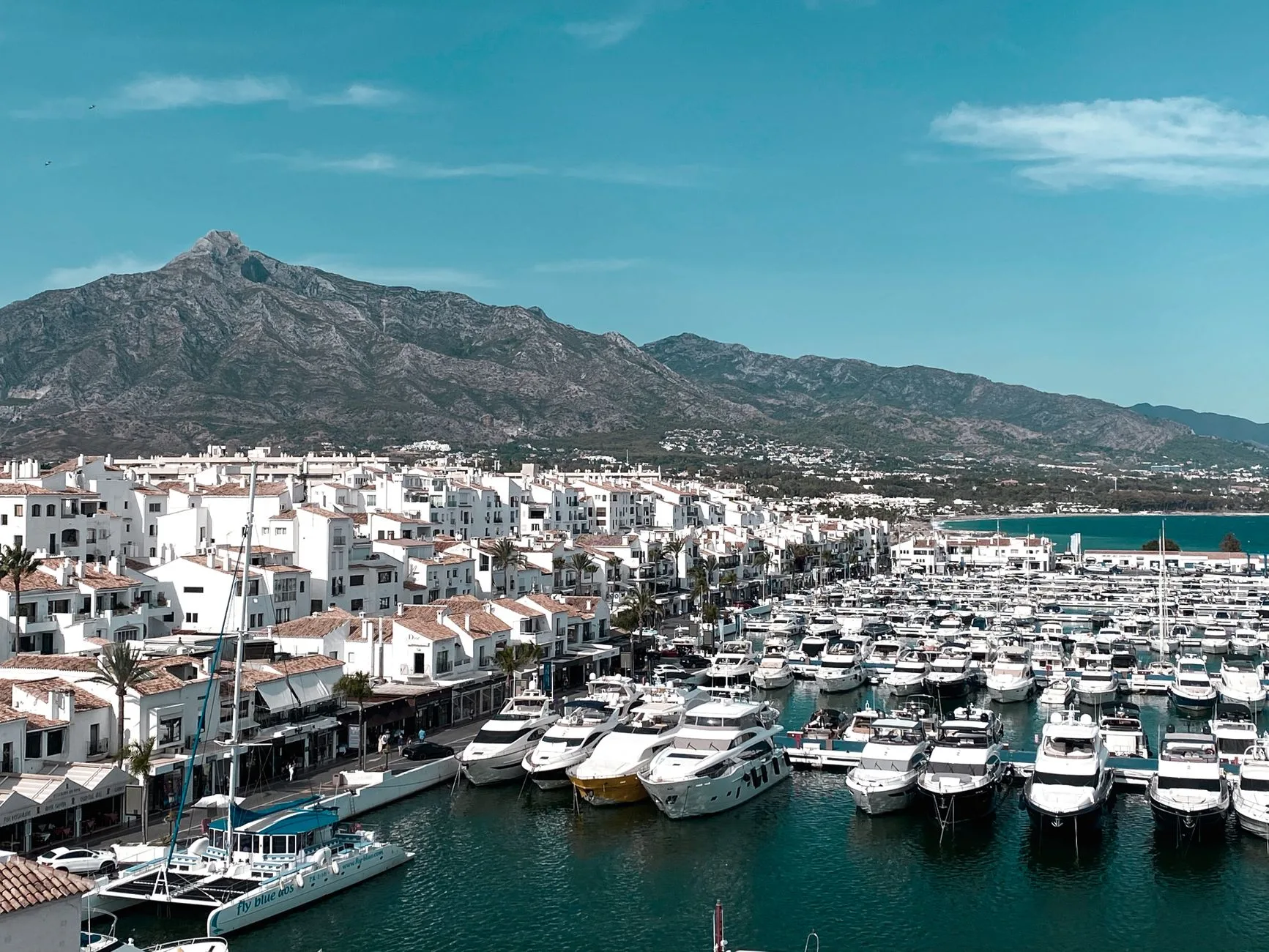
Here’s the thing about Marbella: it has a reputation. You say “Marbella” and people picture yachts, Puerto Banús, Instagram influencers in oversized sunglasses. And sure, that’s part of it.
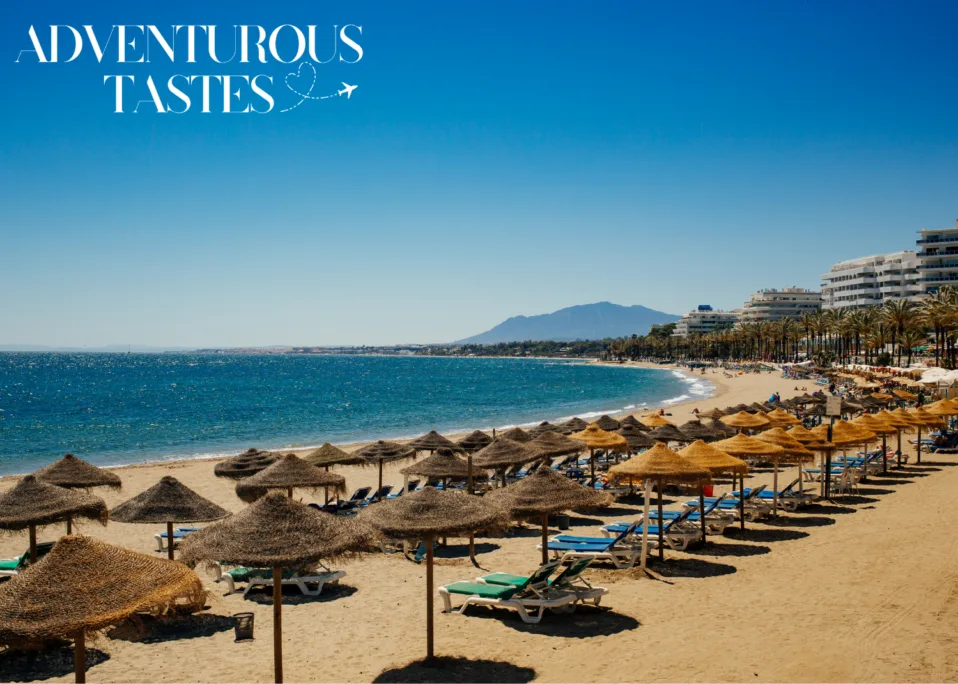
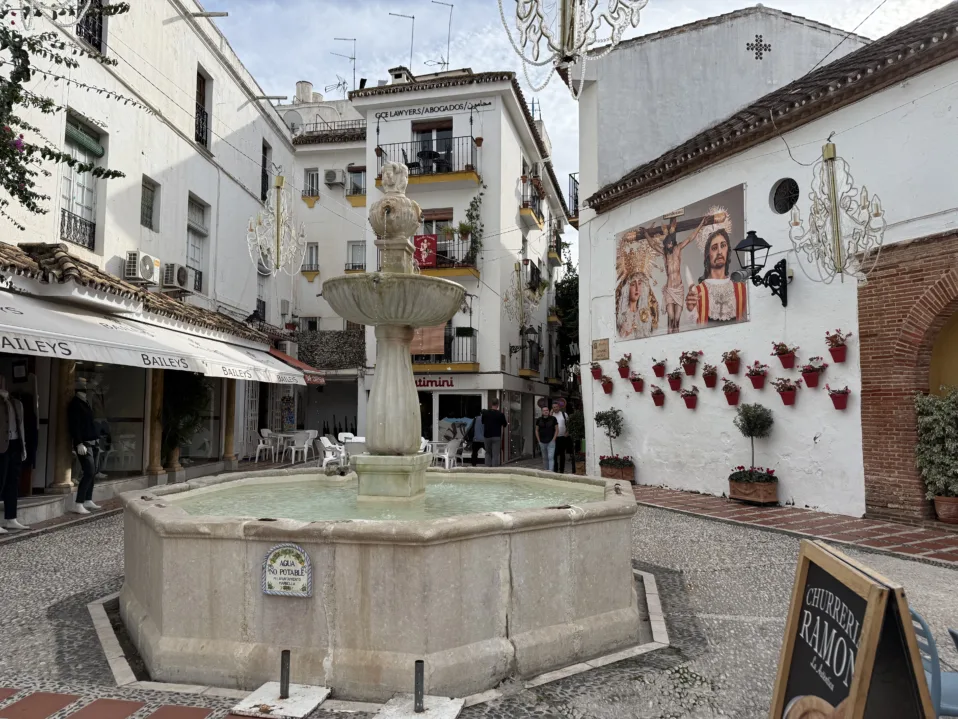
But Marbella is also a place where kids ride bikes to school, where you can be at a mountain trail in 20 minutes and a beach in five, and where there’s a genuinely thriving community of international families in Marbella, Spain that has been here for decades. It’s not a holiday destination that happens to have some schools. It’s a real place with a real infrastructure for families.
When we drove the coast from Benalmadena all the way down to Marbella on a scouting trip, each town had its own personality. Marbella hit differently. The combination of the Old Town, the mountain backdrop, the sea — it reminded me of Malibu (I lived in California for years and that reference just kept coming to mind). Lively without being chaotic. Beautiful in a way that still feels real.
Do a Scouting Trip First (Seriously)
Before you sell your car and pack up your life, you need to book a scouting trip. Do not skip this. We spent a week driving the neighborhoods, visiting schools, and feeling out the vibe to make sure we weren’t falling for an Instagram illusion.
If you are looking for a great base while you scope out areas, we stayed at the Kimpton Los Monteros Marbella. It is located just east of the town center, super close to where we ended up looking at properties in Santa Clara. It gave us a perfect, high-end place to crash and process everything after long days of house hunting.
That said, it’s not for everyone. Here’s who tends to thrive here — and who doesn’t.
It might be a great fit if you:
- Work remotely or run your own business (the Digital Nomad Visa exists for a reason)
- Want your kids in a strong international school environment
- Value outdoor lifestyle, Mediterranean food, and a slower pace of daily life
- Can afford Marbella’s cost of living, which is higher than most of Spain
It might not be the right move if you:
- Need a major city for work or culture (Marbella is not Málaga city, which is not Madrid)
- Are hoping for a significantly cheaper cost of living than where you currently are
- Want to be truly immersed in Spanish culture. The vibe here is definitely impacted by the large non-Spanish and seasonal populations.
- Aren’t prepared for serious paperwork and bureaucracy at every step — everyone warns you about this, and they’re all right
We’ll get into all of this. But if you’re still reading, you’re probably a fit.
And if you’re earlier in the process — still deciding between Spain and Portugal, or whether Europe is even the right move — I’ll have posts on both. The short version of why Spain won for us: quality of life, language accessibility, the Digital Nomad Visa, and Beckham’s Law (a favorable tax regime for new residents that caps income tax at 24% for several years — a big deal for higher earners). Those four things together make Spain particularly compelling for remote-working American families.
The Big Decisions: What You’re Actually Choosing
Moving to Marbella isn’t one decision. It’s about twelve decisions that all affect each other. Here are the ones that matter most for families.
1. Which Marbella Neighborhood is Right for Me?
This is the question that eats the most time, because the answer depends on factors that interact in unexpected ways. Marbella is a long stretch of coastline with distinct neighborhoods, and where you land matters enormously for daily life.
The main areas families consider:
West Marbella (Convenient & Lively)
- The Golden Mile / Nagüeles: The stretch between Marbella town center and Puerto Banús. Nagüeles sits just above the Golden Mile and has a quieter, more residential feel. It’s close to BISM and has reasonably easy access to schools. Property ranges from apartments to sprawling villas.
- Nueva Andalucía: Sits just behind Puerto Banús, inland. This is “Golf Valley” territory—hugely popular with international families and second-home buyers, which keeps prices high. Aloha College is located here, which is a big draw. Less beachfront, great access to golf and outdoor activities.
- San Pedro de Alcántara: Increasingly popular with international families. Good community feel, easy beach access, more affordable than many parts of Marbella. People say it’s more authentically Spanish and has a very different vibe than nearby Puerto Banús.
Nearby but Not Marbella
- Estepona: Further west and increasingly popular with families, but it puts you further from Málaga airport. Something to factor in depending on your priorities. Atlas American School is located between here and Marbella.
East Marbella (Quieter & Residential)
- Cabopino: Further east still, quieter and lower-density, known for its small marina and protected sand dunes. Less of an international school hub, but worth knowing about if you want something away from the main activity corridors.
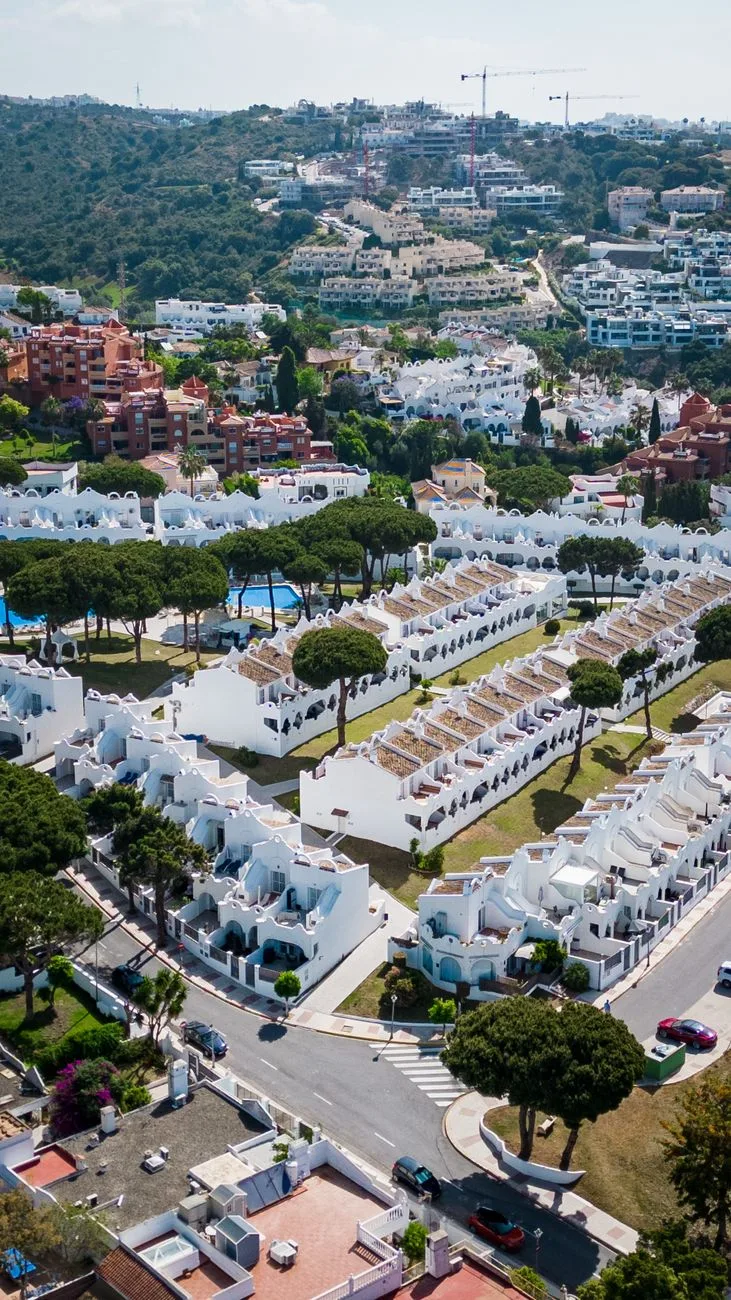
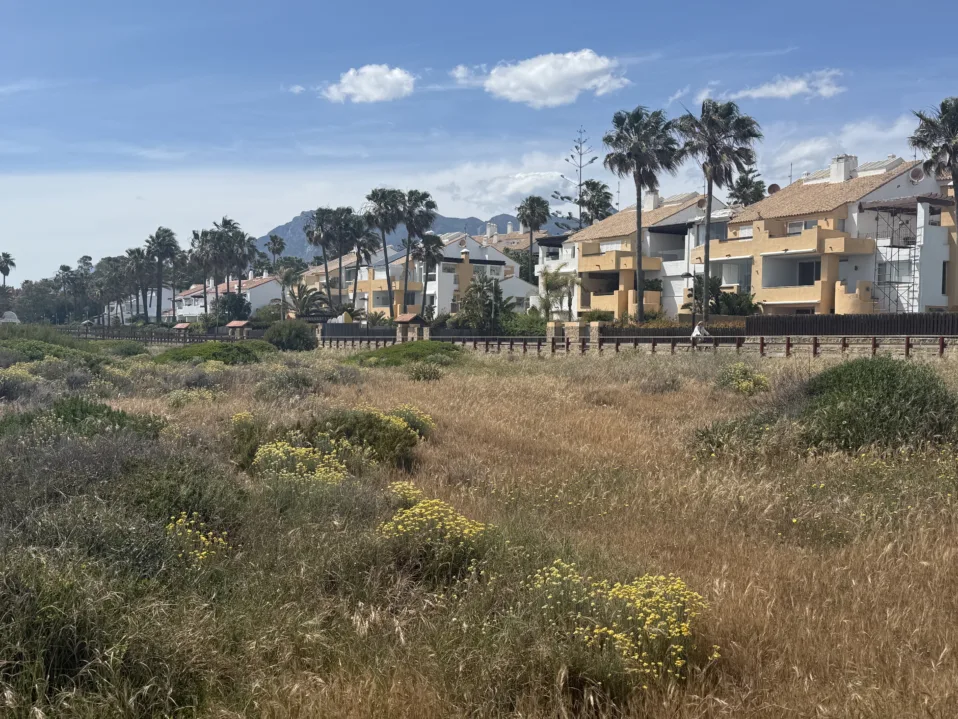
- Santa Clara: Located just east of Marbella town center, this is a highly secure, master-planned residential development built around a golf course. Let’s be real: it doesn’t have the organic, walkable neighborhood personality of a place like Elviria. It’s an upscale, pristine enclave of modern villas and townhouses where you will absolutely need a car to get around. But if you want top-tier gated security, peaceful golf-course views, and a five-minute drive to downtown Marbella, it is an incredible choice, which is exactly why this is where we are making our offer.
- Elviria: East of Marbella town. It has a genuine residential feel, solid beach access, and tends to be more affordable than the Golden Mile without feeling like a compromise. The English International College (EIC) is located here, making it a major hub for international family circles.
The trade-off we keep coming back to: beachfront vs. space vs. school proximity vs. walkable access to shops and restaurants. You probably can’t have all four. Decide which matter most before you start seriously touring — it saves a lot of time and heartbreak.
Three important notes about house hunting in Marbella:
First, Spanish property listings don’t include addresses. Your agent literally has to call someone to find out where a property is, which means listing descriptions can be… optimistic. We saw one house described as a 10-minute walk to the beach that was definitely closer to 20 — and that’s before accounting for the uphill return. This is one of many reasons a great agent is non-negotiable here. More on that below.
Second, listings aren’t exclusive, so you’ll see the same home show up multiple times on sites like Idealista. We opted for an agent who only represents buyers so we knew she had our best interest at heart and wasn’t just trying to show us properties she wanted to sell.
Third, a great legal team (we highly recommend Marbellex) and sufficient due diliigence is a must because it seems relatively common for people to have done unpermitted renovations. In that case, you have to go through a very slow City Hall process to resolve it, and there was no way we could have handled that process on our own. We thought we were locked on a place, and after extending the due diligence period to try to resolve the issues that arose from them not permitting work properly, we had to walk away. Heartbreaking!
2. Which Marbella School is Right for Us? (The Biggest Question for Families Moving to Marbella with Kids)
Spain has excellent public schools, and many international families do choose that route — especially for younger kids who can pick up the language quickly. There are also “concertados” — schools that are semi-private and partially state-funded. I’ll cover all of this in the schools article. For us, with older kids for whom the move will already be a significant adjustment, going into a Spanish-language environment on day one wasn’t an option. For that reason, we only considered English-language international schools.
Based on our research, the most well known, prestigious English-language options — and the names that come up most among international families — are Aloha College, Swans International School, and EIC. All three have strong reputations and fill up each year. Swans is smaller and struck us as stricter and more formal in its culture. It follows the British curriculum through GCSEs and then switches to IB. Aloha is much larger and gives you the option of pursuing A-levels or IB in your final two years. EIC is further east and has a unique campus built into an old hotel property so classes are distributed in different small buildings and there’s lots of outdoor walking between buildings. EIC offers only GCSEs followed by A-levels. As an American the British curriculum requires some research, and I’m still not sure I love the high-stakes GCSE testing that becomes the focus as early as 10th year (US 9th grade), but that is common across nearly all of the schools we considered. These schools offer bus service that goes up and down the coast so you don’t necessarily need to live close by.
BISM (The British International School of Marbella) flies a little under the radar compared to these schools likely because it is newer, but it gets consistent raves from parents. They especially praised its “pastoral care” — meaning how well the school knows and looks after each individual child, not just academically but emotionally and socially. BISM is also known for being particularly attentive to kids with dyslexia and other neurodivergent learning profiles. Worth knowing: BISM does not have a bus service, so if your kids attend, you’re driving. It offers GCSEs and A-levels and its secondary school is located in a beautiful new campus.
We strongly considered Atlas American School near Estepona because there are obvious benefits of sticking with an American curriculum, and it has a big beautiful new campus. In addition to lots of Spanish bilingual options, there are also German, French and Swedish schools in the area for native speakers of those languages.
A few things that apply across the board: all of these schools require entrance tests taken with a certified proctor and interviews, so applying is a process. Start early and don’t wait until your visa is in hand.
I talked to every parent I could track down who had kids at these schools — current families, families who’d switched schools, families who’d graduated. They had a lot to say, and I highly recommend you do the same if you want the real scoop. There was at least one school we seriously considered that enough parents had horror stories about that we took it off our list.
On school costs: Private international school fees in Spain are genuinely one of the better surprises in this move. Coming from the DC area where private school can run $40,000–$50,000 per year per child, Spain feels like a bargain. I researched international schools everywhere from Mexico to Bali and fees in those markets are typically $30,000 and up. Spain’s tuition is far more reasonable. The schools we looked at tended to be around €17K-20K but that varies by school and by age.
Pro tip: While buses make it possible to live further afield, I recommend you pick your school first and then look at housing.
3. Visa: The Digital Nomad Visa (DNV)
If you’re an American moving to Spain to work remotely for a non-Spanish employer, the Digital Nomad Visa is probably your path. It’s a relatively new visa category — Spain launched it in 2023 — and it’s designed for people in exactly your situation.
The key requirements:
- You work remotely for a company (or clients) outside Spanish territory
- You earn above a certain threshold (roughly 200% of Spain’s minimum wage as of 2025)
- You have private health insurance
- Clean criminal background
- Evidence of your employment for at least 3 months with your current employer (contract, payslips, etc.) (this one is more complicated than it sounds. More on that in a moment)
There are two ways to get it: apply from the US (you get a one-year visa that converts to a residencia) or enter Spain visa-free and apply in-country (you get a three-year residencia directly). The in-country route requires a stressful leap of faith, but it gets you the longer initial residency right away.
We’re working with an immigration lawyer — I can’t recommend this highly enough. The documentation is specific, the translation requirements are real, and one wrong piece of paper can restart your timeline. We interviewed multiple companies before choosing Roots Global. Your lawyers will tell you all the documentation you need and will handle the actual application process.
Pro tip: Many of the required documents must be apostilled and translated, so it’s all slower and harder than it sounds. Plus, many of them have to be less than 3 months old at the time of application, so you have to get your timing right. Why does Spain need my collegre diploma notarized, apostilled and translated? Who knows!
Here’s an important quirk we learned the hard way. Many international employers have separate entities in different countries. So let’s say you are employed by their US entity today, and when you move to Spain, they want to employee you through a European entity. According to several lawyers we spoke with, Spain will consider this a new employer. That means you can’t qualify for the digital nomad visa because you don’t have 3 months of employement. It’s an insane catch-22 because you can’t start the employment without being there, but you can’t be there for 3 months without applying for your visa. We ultimately gave up on that route and chose the easier path of being paid in the US.
Pro tip on shipping: Your belongings can’t arrive with international shippers until your visa is sorted — if you want to avoid import taxes. So factor in a wait for your stuff. We’re planning accordingly.
4. Property: Buy vs. Rent, and Why We Bought
A lot of relocation guides tell you to rent first before buying. That’s reasonable advice in many markets. Marbella is a bit different, and here’s why we chose to buy.
The Costa del Sol is geographically constrained — mountains on one side, Mediterranean on the other, which means a finite amount of land to build on. Demand is high and structural: there’s a huge inflow from northern European countries (the English, Scandinavians, and increasingly in recent years people from Russia and Ukraine) who want sun and quality of life, plus a very active second-home and vacation rental market. Because landlords know they can earn serious money renting short-term in summer, long-term rental yields are high — which means rents are expensive, and landlords aren’t always enthusiastic about locking you in for a full year when summer bookings are so lucrative. It’s not impossible to rent long-term, but it’s a harder market than it looks.
Property values have consistently risen here. Given all of that, buying made more sense for us than paying premium rent indefinitely. Now after walking away from the house we thought we were buying, we’re going to have to do a short term rental while we look for a new house to buy. This is not how we wanted to do things. But when you move across the world, things aren’t always going to go smoothly.
That said — buying in Spain has genuinely quirky features that you need to understand. The address thing I mentioned above is just one of them. Budget 8–11% on top of the purchase price in taxes and fees (transfer tax, notary, land registry, legal fees). That’s not negotiable.
I’ll have a full post on the buying process. But the most important thing I can tell you right now is this: get a great agent. Which brings me to the most useful thing in this entire post.
About Our Agent
Our agent was a lifesaver. Full stop. She drove us all over the coast through multiple neighborhoods, helped us understand the real trade-offs between areas, and never tried to steer us toward anything that didn’t fit what we actually needed. She’s also a delight to work with — warm, sharp, and extremely knowledgeable.
Beyond the property search, she’s been a connector: she set us up with lawyers, inspectors, and various other people we needed along the way. She also has kids in the private school system herself, so she could speak to the school landscape firsthand and connect us with other parents when we needed more input.
I highly recommend her and I’m happy to share her details if you contact us
One thing to know about the Spanish real estate market: agents are not required to be licensed the way they are in the US. The market is essentially unregulated. On top of that, properties aren’t listed exclusively, so you’ll often see the same listing appear multiple times on Idealista from different agents. Because of this, agents tend to want to know you’re working with them exclusively before investing serious time in your search. My strong advice: pick someone exceptional from the start rather than contacting random agents and ending up stuck with a bad fit. You don’t want to be navigating a foreign property market with someone who doesn’t know what they’re doing.
As of June 2026, we had to walk away from our chosen house due to some issues that our legal team discovered. The glacial pace of Spanish bureaucracy is infamous for a reason so we were stuck in limbo. So we’re trying to secure a rental and make an offer on a new penthouse in Santa Clara. Fingers crossed!
5. Moving the Money
This is the practical topic that almost no relocation blog covers honestly, and it’s one of the most important.
If you’re American and converting dollars to euros for a property purchase, think carefully about timing and fees. Banks typically offer lousy exchange rates and high fees. Wise is significantly better.
For our down payment, we moved money in tranches rather than all at once — timing the market is impossible even for experts, so it’s better to spread the risk over time vs. doing it all at once. Wise also makes it easy to set a limit so you can trade automatically if there’s a particularly big swing in rates. I’m not a financial advisor but I do know that Wise consistently comes up as the preferred transfer partner of people in all the expat/immigration groups I’m in.
Pro tip: Wiring money can take a few days so make sure you leave yourself plenty of time to move money for any big purchases. I hate when I miss a great exchange rate because my money takes too long to move from the US so I prefer to have some in place ready to exchange when needed. Wise also offers interest on the money you move there, so it makes leaving the money there even more appealing.
Cost of Living: The Honest Version
Marbella is more expensive than most of Spain. It’s cheaper than London, New York, or Zurich — the comparison that matters for most of the international families here. Coming from DC, the overall picture is favorable for us, especially once you factor in school fees.
Here’s a rough sense of what to expect (I’ll update this with our actual numbers once we’ve been living here a few months):
Housing is the big variable. Buying a family-sized property starts around €600k in most good neighborhoods and goes up steeply. Long-term rentals exist but aren’t cheap — landlords in Marbella know their summer short-term rental value.
International school fees are significant but genuinely better than most comparable markets. I’ll publish actual figures in the schools post.
Groceries are quite reasonable, especially if you shop at Mercadona like a local. Dining out is affordable at local spots; beachfront restaurants are where prices spike.
A car is pretty much necessary unless you’re in Marbella town center. Budget for purchase or long-term rental plus insurance.
Things to Know Before You Go
Bureaucracy. Everyone says this and they’re all right. Spain’s administrative systems are not fast, not digital, and not forgiving of missing or incorrect documents. Build extra time into every official process. Then add more.
Arriving in summer is disorienting. Marbella in July and August is a different animal than Marbella in May. More people, more traffic, more noise, especially near the coast. We’re arriving in July, so I’ll experience this firsthand. If you are too: don’t judge the whole year by it. September is apparently glorious.
The international community is your lifeline early on. There are large, active Facebook groups for international families in Marbella and the Costa del Sol. Join them before you arrive. People share real recommendations, answer genuine questions, and are remarkably helpful to newcomers.
Spanish helps more than you think. The international school community operates in English, and many services in Marbella cater to English speakers. But daily life is measurably better once you can have basic conversations — with neighbors, at the market, at your kids’ activities. Start learning now.
Healthcare has two tracks. Private health insurance (which you’ll have for the DNV anyway) gets you fast, high-quality care. The public system is technically available once you’re a legal resident, but most international families stick with private. Cigna and Sanitas come up most often in the community.
Resources Worth Bookmarking
- Idealista — the dominant property portal for Spain
- Wise — for currency transfers (use this, not your bank, for large transfers)
- Spain’s official DNV information — always verify here; the rules have evolved since the 2023 launch
- Our agent — contact us for the referral
Lots more moving to Spain content coming.
Frequently Asked Questions About Moving to Marbella with Kids
We certainly hope so! The international school options are strong, the outdoor lifestyle is incredible, and the international family community is large and welcoming. Kids here grow up with beach days, mountain hikes, and exposure to multiple languages and cultures as a normal Tuesday. The main trade-offs are cost (it’s not cheap) and the adjustment period — but most families who make the move say they’d do it again.
Our impression has been that English is widely spoken in Marbella. When I try to speak in my halting Spanish at a restaurant, they quickly switch into English. The international schools operate in English, and plenty of services in Marbella cater to English speakers. That said, your quality of life goes up noticeably once you have basic conversational Spanish — for neighbors, errands, your kids’ activities, and just feeling like you actually live there rather than visit. Start learning before you arrive. We’ve been using Duolingo for years, and we know we have a long way to go, but at least we’ve started the process.
Most remote-working Americans use the Spain Digital Nomad Visa (DNV), which launched in 2023. It requires proof of remote employment outside Spain, income above a set threshold, private health insurance, and a clean background check. You can apply from the US or in-country once you arrive. I’d strongly recommend working with an immigration lawyer — the documentation is specific and one wrong piece of paper can set your timeline back significantly.
More than most of Spain, less than London or New York. Housing is the biggest variable — family-sized rentals in good areas run €2,500–€4,000+/month, and buying starts around €600k in most desirable neighborhoods. International school fees are significant but genuinely more reasonable than comparable schools in the US or most of Asia. I’ll have real numbers from our own family budget publishing in August 2026.
The names that come up most among international families are Aloha College and Swans International School. BIS Marbella gets strong praise for pastoral care and support for neurodivergent kids. Atlas American School, Laude San Pedro, and EIC are also worth researching depending on your kids’ ages and needs. All require entrance tests with a certified proctor, and most have waiting lists — apply early.
Depends on your situation, but Marbella is one of the stronger cases for buying if you can. The area is geographically constrained between mountains and sea, demand is consistently high from northern European buyers and second-home seekers, and the short-term rental market keeps long-term rents expensive. That said, renting first while you get your bearings is reasonable — just know it’s not a bargain market either way.
Beckham’s Law is a Spanish tax regime that caps income tax at a flat 24% for qualifying new residents for up to six years. It was originally designed to attract foreign professionals and athletes (yes, that Beckham). Americans who move to Spain and establish tax residency here may qualify — and for higher earners, the savings compared to standard Spanish progressive tax rates are significant. You’ll want a Spanish tax advisor to confirm your eligibility and handle the application.
It varies depending on whether you apply from the US or in-country. The in-country route (applying after entering Spain visa-free) currently takes several months from application to approval. It lasts three years. The US consulate route can also vary by consulate location and current processing volumes. It lasts one year. Why does Spain incentivize you to apply from inside the country? Who knows?! Build more time into your timeline than you think you need, and don’t book one-way flights until you have a realistic read on your specific situation from your immigration lawyer.
There’s no single answer — it depends on your priorities. Nueva Andalucía is convenient for Aloha College. The Golden Mile and Nagüeles put you close to BISM and the beach. Elviria is great for EIC and offers lower prices than Nueva Andalucia or Golden Mile. San Pedro is more affordable with a strong community feel. The best thing you can do is visit multiple areas with a good agent before committing.
You can, but you’ll need a visa pathway that doesn’t require employment. The Non-Lucrative Visa is an option for people who can demonstrate sufficient passive income or savings to support themselves without working in Spain. It’s a different process from the DNV and has its own income thresholds and restrictions. If you’re retired or have investment income, it’s worth looking into — but again, an immigration lawyer is your friend here.
The Bottom Line
Moving to Marbella with kids is absolutely doable. It’s also a significant undertaking that requires real planning, real paperwork, and realistic expectations about cost and bureaucracy.
For the right family — and I genuinely believe we are one — it’s going to be wonderful. The quality of life is high. The international school options are strong. The food is spectacular. The weather speaks for itself.
Ask me again in September how the July arrival went.
If you’re researching your own move to Marbella with kids right now, I hope this helps. Drop your questions in the comments. I’m living this in real time and I’ll answer what I can.
I’ve included affiliate links throughout this post for services we actually use. If you book or sign up through my links, I may earn a small commission at no extra cost to you.
Save for Later